
Nature and biodiversity in sustainability strategies
Time to act
Over 50% of global GDP is moderately or highly dependent on nature and its services, according to the World Economic Forum. Yet, nature remains threatened by ongoing human activity. Despite this existential threat, organisations are often unaware and have not included nature and biodiversity within their sustainability strategy.
This stands in contrast to more mature climate risk assessments, which have often been mandated by regulators and governments. We must now take meaningful action for nature and biodiversity through our sustainability strategies.
What are nature and biodiversity-related dependencies, impacts, risks and opportunities?
Dependencies, impacts, risks and opportunities (DIROs) cover the impact of nature and biodiversity on an organisation (inward focus) as well as the impact that organisations have on nature and biodiversity (outward focus). DIROs vary from sector to sector and for each organisation, there isn’t a simple cheat sheet to give you the answer.
Dependencies include those ecosystem services, the benefits that we receive from nature, that an organisation relies on to function.
Clear examples include provisions of nature: dependencies on food, medicines, raw materials, and fresh water. You cannot run an organisation if you are unable to provide the required raw materials or products. If you are reliant on large data centres or bottling plants, water availability may be a key dependency.
However, we are also dependent on the environment to:
- regulate ecological functions, such as pollination
- provide supporting services, such as fertile soil
- offer cultural services, ecotourism and spiritual values.
There are potential threats posed to an organisation arising from nature-related causes. Examples include a supply shortage of raw materials for a manufacturer or water shortages for international beverage retailers. Insurance and financial services have a particularly interesting risk profile, with risks emerging across different lines of business.
For example, illegal logging may lead to high unexpected liability claims, unsustainable agricultural practices may increase business interruption claims due to lower yield of crops, and rainforest destruction can impact access to medicine, leading to life insurance impacted by increased mortality.
Starting your assessment: start simple, focus in
Nature and biodiversity DIRO assessments can get complex, but firms should start simple. As with climate, only material DIROs need further assessment. Therefore, step one should be to narrow your focus via a materiality assessment.
Use existing frameworks. The most internationally recognised being the Taskforce of Nature-related Financial Disclosures (TNFD) LEAP assessment: locate, evaluate, assess and prepare.
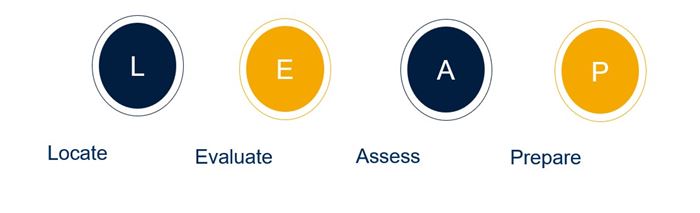
Firstly, locate where you interact with nature. This assessment should cover considerations across the value chain and consider all aspects of the organisation. This should be specific to the relevant biome (the type of ecosystem) and location, where possible. Using proxy data, such as the ENCORE data, can support this assessment by providing sector-specific information on likely impacts and dependencies.
Get stakeholder buy-in
Given the current political and economic landscape, the challenge of securing company-wide buy-in to enable the organisation to assess and take action on nature and biodiversity should not be underestimated. To build internal support, firms may want to invest in educational sessions across the business. This helps develop the necessary expertise and fosters broader organisational buy-in. Ideally, this should include the Board and Executives / senior leadership. Overall, engaging with stakeholders early and making it clear that the nature and biodiversity assessment is not new but rather follows the fundamentals of risk management and is closely aligned with existing approaches for climate is a helpful step forward. Businesses are already used to managing significant risks, and nature-related risks are just another part of that landscape.
Nature and biodiversity risks should not be neglected; they are material business issues. As regulatory expectations evolve and ecosystems face increasing pressure, organisations that act early will be better positioned to manage risks and maximise opportunities. By starting with a simple, materiality-led approach and using frameworks like TNFD, firms can build a robust, actionable strategy.
Through our practical and experienced team, our Consulting team continues to support our clients in setting their own agenda to address rapidly changing sustainability and climate-related requirements.
Please contact your usual Crowe contact for more information.
Contact us


