View the full document for detailed insights and complete information.
Knowledge At The Speed Of Change
Discover how AI and continuous learning help organizations adapt, innovate, and make better decisions
11/13/2026
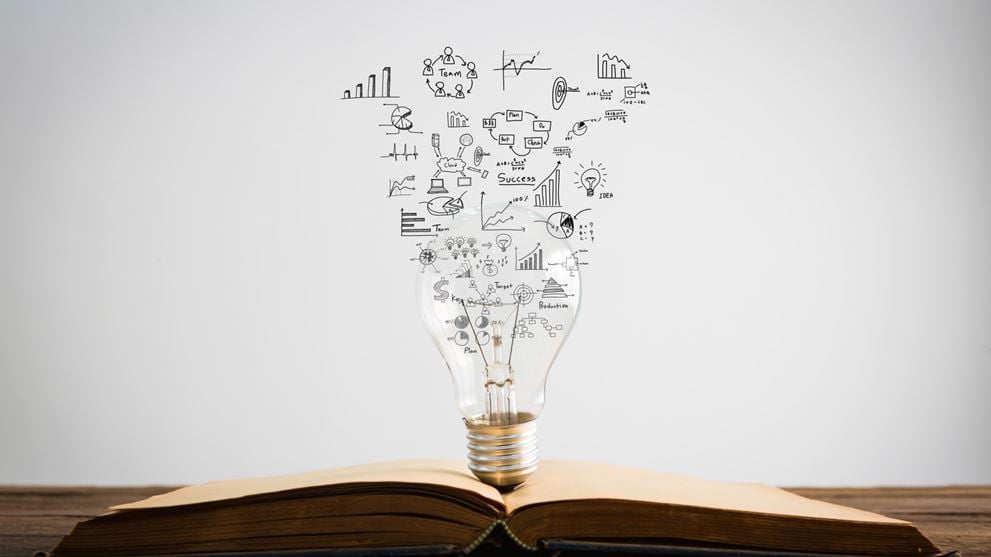
In today's digital economy, organizations are surrounded by more information than ever before. Yet the real challenge is no longer access to knowledge. The challenge is knowing how to navigate, validate, apply, and continuously update information in a world where change is accelerating. The future belongs not to those who memorize the most, but to those who manage knowledge effectively and transform it into value.
Research highlighted in the publication shows that skills disruption continues to reshape the workforce. While earlier reports suggested that 44% of skills would be disrupted by 2027, more recent findings indicate that 39% of skills will change by 2030, with 59 out of every 100 workers expected to require training. These figures demonstrate an important reality: learning can no longer be viewed as a periodic activity. It must become a continuous capability embedded into everyday work.
The scale of information growth reinforces this challenge. Global data volumes have expanded dramatically, growing from approximately 11 zettabytes in 2015 to 175 zettabytes in 2025, with projections exceeding 1,000 zettabytes by 2030. As data multiplies, organizations risk confusing information abundance with genuine knowledge. Data alone does not create insight. Information provides context, knowledge creates understanding, and wisdom guides decisions. The strategic question for leaders is not whether they have more data, but whether they are making better decisions because of it.
An important message from the report is the need to challenge assumptions and verify claims. Several widely shared statements about information growth and knowledge doubling fail under scrutiny. This highlights the importance of evidence-based decision-making and critical thinking in an environment where misinformation can spread as quickly as facts.
The strongest path forward combines human capabilities with artificial intelligence. Humans contribute judgment, ethics, accountability, and contextual understanding. AI contributes speed, scalability, synthesis, and pattern detection. Together, they form a future-ready intelligence model that augments decision-making while maintaining human responsibility.
To thrive in this environment, leaders should treat skills as dynamic enterprise assets, invest in knowledge infrastructure, implement governed human-AI workflows, embed learning into daily operations, and link capability development to measurable business outcomes. Organizations that adopt this approach will move beyond knowledge accumulation and toward real-time capability creation, ensuring they remain agile, resilient, and competitive in an era defined by constant change.
Conclusion
The future of knowledge lies in the ability to adapt, validate information, and turn insights into action. By combining human judgment with AI capabilities and embedding continuous learning into everyday operations, organizations can make better decisions, strengthen resilience, and create measurable business value in an ever-changing world.
Future Readiness
Future Ready Friday is a weekly publication by Crowe Pioneering & Excellence Consulting, delivering insights on emerging trends, innovations, and strategies to help businesses stay ahead in a rapidly evolving world.

Dr. Ahmed Tarawneh
Partner - Pioneering & Excellence