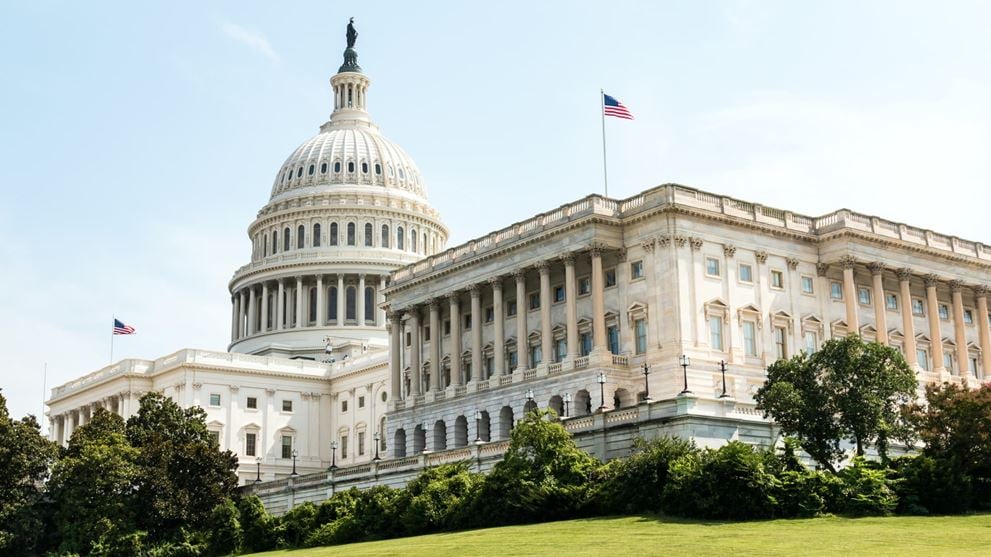
- The shift to Democratic control of Congress in 2027 creates uncertainty for federal tax legislation.
- Taxpayers should anticipate continued federal tax policy developments and uncertainty as shifting political priorities shape the legislative and regulatory agenda.
With Democrats winning the majority in both the House and Senate after the midterm elections and the White House being controlled by Republicans, interesting challenges are ahead over the next two years for both parties. Republicans retain control of Congress and the White House, however, during the lame duck period between the midterm election and the current session expiring at the end of 2026. Here are the five federal tax policy issues to watch over the lame-duck period and into the next Congress:
- Government funding. The continuing resolution (CR) to fund the government for the 2027 fiscal year (which began Oct. 1, 2026) is set to expire Dec. 11, 2026. If the CR isn’t extended, the government, including the U.S. Department of the Treasury and the IRS, will shut down. Recent government shutdowns have not been popular with the public, making the prospect of closing the government very unappetizing. However, other issues currently before Congress, such as the war in Iran, could make it difficult for the parties to come to an agreement on funding.
- Tax legislation during the lame-duck period. Republicans were hoping to pass tax legislation during the remaining days of the current Congress, which expires at the end of 2026, before they lose the majority. However, the current to-do list in Congress is long and tax is not at the top of the agenda. While some bipartisan tax proposals are in the queue, it is unclear whether the members have sufficient time to get to these proposals and, even if they do, it is unclear whether the current environment would be hospitable to acts of comity. Additionally, many Democrats are waiting until the next Congress begins in 2027 when they are in the majority to tackle tax legislation that might have bipartisan support.
- Year-end regulations. The 2026-2027 Priority Guidance Plan, which sets Treasury’s and IRS’ regulatory agenda, was released Sept. 29, 2026. A Treasury official recently explained that the intention is that all the projects on the plan will get published during the plan year, which corresponds to the government’s fiscal year. The official also indicated that the goal is for guidance projects implementing provisions enacted by the One Big Beautiful Bill Act with 2025 effective dates to be published by the end of 2026. Based on this explanation, several guidance projects are expected in the next six weeks, including regulations under Section 168(n) regarding qualified production property, Section 174 and Section 174A regarding research and experimental expenses, and the foreign entity of concern rules for certain energy projects.
- 2027 tax outlook. A number of tax proposals have bipartisan support, such as the Taxpayer Assistance and Service (TAS) Act, which aims to improve tax administration. However, the Democrats have said that they want to quickly pass legislation that will address issues that were front and center in the midterm election like healthcare, housing, and affordability. While some of these issues could gain bipartisan support, they also could cause partisan rifts that would make it hard to enact bipartisan legislation like the TAS Act.
- AI. Executives at the IRS and Treasury have stated that IRS is using AI to improve operations and service. The head of the Small Business/Self-Employed division of the IRS recently said that AI is being used in case selection and compliance work and its use will be expanded to identify nonfilers. This statement is one of the most specific made by the agency. As dialog continues around AI and how it is used at the IRS, the agency will face pressure to be more transparent about its use of the technology, how it is protecting IRS systems and the security and confidentiality of taxpayer information, and how it is ensuring the accuracy of the technology and its output, among other issues.
Crowe observation
Until the Congress begins, it is unclear whether any tax legislation will get enacted in 2027.
Looking ahead
The OBBBA had a significant impact on federal tax policy over the past two years. As the Democrats take control of Congress, it will be interesting to see what changes they make and how they tee up their agenda for the upcoming 2028 presidential election. Taxpayers should continue to expect a busy tax legislative and regulatory agenda over the next two years, though whether tax legislation will be enacted during this period is still unknown.
Contact us
Our experienced tax professionals can help you tackle your most pressing tax challenges. Contact the Crowe tax team today.

Explore more content