
Weekly Cybersecurity Bulletin 20 - 26 April 2026
Critical Vulnerabilities, AI Security Risks & Global Breaches
Reading time: 3 minutes
The global cybersecurity landscape continues to evolve rapidly, with critical vulnerabilities, high-impact breaches, and AI-driven security developments shaping risk exposure across industries. This week’s bulletin highlights urgent threats and strategic insights relevant to organizations across the UAE and wider Middle East.
Critical Vulnerabilities Threatening Enterprise Systems
Recent disclosures reveal multiple high-severity vulnerabilities that demand immediate attention from security and IT teams.
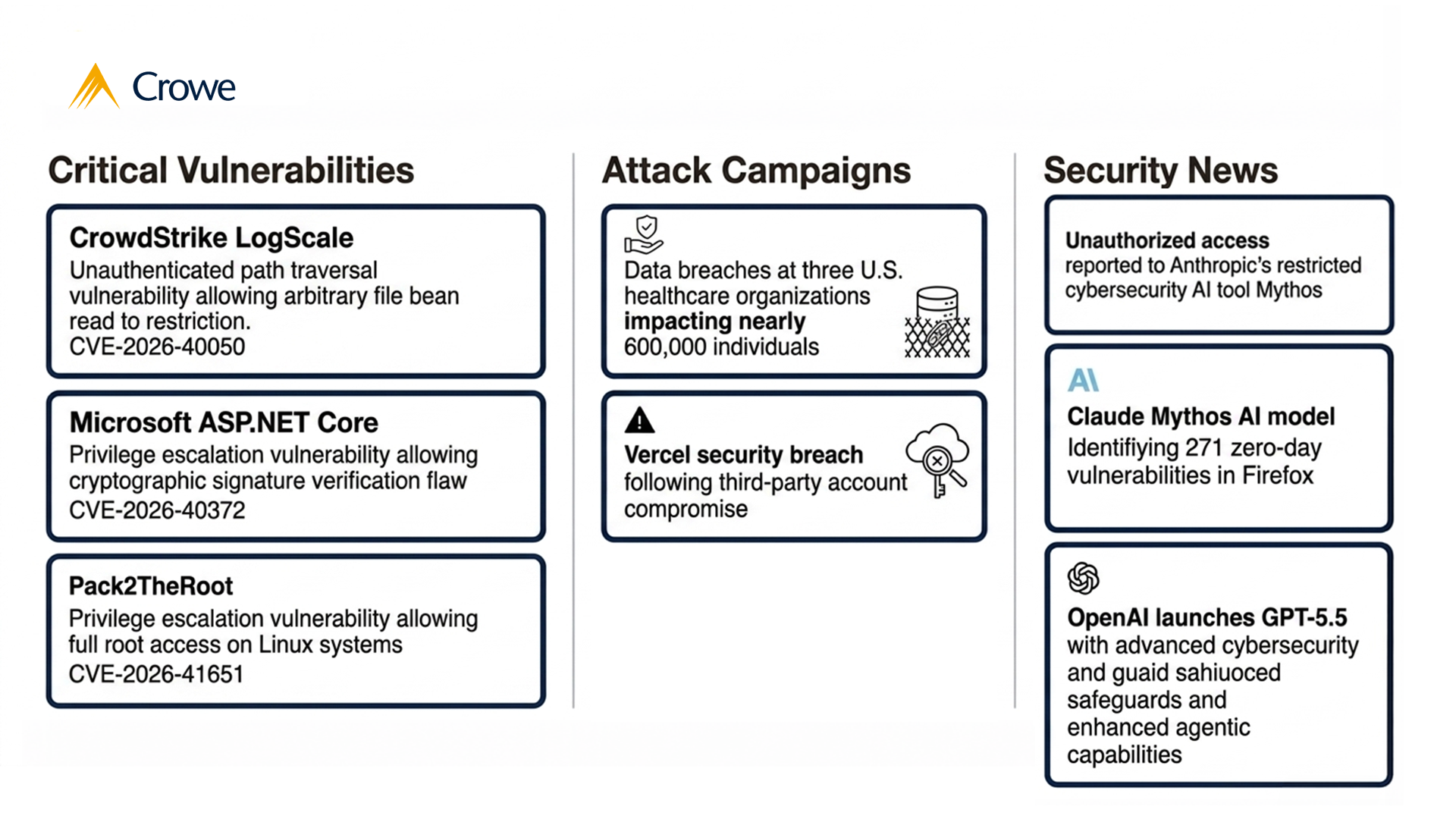
A critical flaw in CrowdStrike LogScale (CVE-2026-40050) allows unauthenticated attackers to exploit a path traversal vulnerability and access sensitive files. Given LogScale’s widespread use in security analytics, this issue poses a significant risk to organizations relying on centralized log management.
Microsoft has also addressed a privilege escalation vulnerability in ASP.NET Core (CVE-2026-40372), caused by improper cryptographic signature validation. Attackers could exploit this flaw to gain elevated privileges, potentially compromising enterprise applications and backend systems.
Meanwhile, a newly identified Linux vulnerability, Pack2TheRoot (CVE-2026-41651), enables full root access on affected systems. This vulnerability is particularly concerning for cloud environments and critical infrastructure relying on Linux-based deployments.
Organizations in the UAE financial and government sectors are strongly advised to prioritize patch management and conduct vulnerability assessments to mitigate exploitation risks.
Major Cyber Attacks and Data Breaches
Cyber incidents this week highlight ongoing risks associated with third-party dependencies and data protection failures.
Three U.S. healthcare organizations reported breaches impacting nearly 600,000 individuals. These incidents underscore persistent weaknesses in protecting sensitive personal and medical data, a concern equally relevant to healthcare providers and regulators in the Middle East.
In another significant development, Vercel confirmed a security breach linked to a compromised third-party account. This incident reinforces the growing importance of third-party risk management, particularly for organizations operating in cloud-native and SaaS environments.
For UAE-based enterprises, these cases emphasize the need for stronger vendor risk assessments, continuous monitoring, and zero-trust security models.
AI Security Developments and Emerging Risks
Artificial intelligence continues to reshape cybersecurity, introducing both opportunities and new risks.
Anthropic reported unauthorized access to its restricted cybersecurity AI tool, Mythos. This raises concerns about securing advanced AI systems designed for vulnerability discovery and threat analysis.
Notably, the Claude Mythos AI model identified 271 zero-day vulnerabilities in Firefox, demonstrating the growing capability of AI in accelerating vulnerability discovery. While beneficial for defensive security, such advancements could also be leveraged by threat actors if not properly controlled.
In parallel, OpenAI announced the launch of GPT-5.5, featuring enhanced cybersecurity safeguards and more advanced agentic capabilities. These improvements aim to strengthen secure AI deployment while supporting enterprise automation and threat detection.
For GRC leaders in the UAE, these developments highlight the urgent need to integrate AI governance frameworks, ensuring responsible and secure use of AI technologies.
Strategic Takeaways for UAE Organizations
- Strengthen vulnerability management and patching cycles.
- Enhance third-party risk management frameworks.
- Implement zero-trust architecture across critical systems.
- Establish AI governance and cybersecurity oversight mechanisms.
- Continuously monitor emerging threats and regulatory expectations.
As cyber threats grow in sophistication, organizations across the UAE must adopt a proactive and integrated approach to cybersecurity, aligning technology, governance, and risk management strategies.
Explore detailed analysis of critical vulnerabilities, major breaches, and AI-driven security risks shaping this week’s threat landscape, and gain actionable insights to strengthen your organization’s defenses.