
Unlocking enterprise value through IP
A strategic approach to M&A valuation
In M&A transactions, intellectual property derives its value not merely from ownership, but from its ability to be effectively enforced, strategically deployed, and commercially monetized. Acquirers and investors assess IP based on how well it supports revenue generation, market positioning, and long-term business objectives, making enforceability and usability critical determinants of value.
Reframing IP in M&A
Intellectual property must be treated as a separable, revenue generating asset class, not merely protective right.
- Identifiable and transferable intangible asset
- Capable of independent commercialization
- Central to goodwill and brand valuation
IP Value Analysis
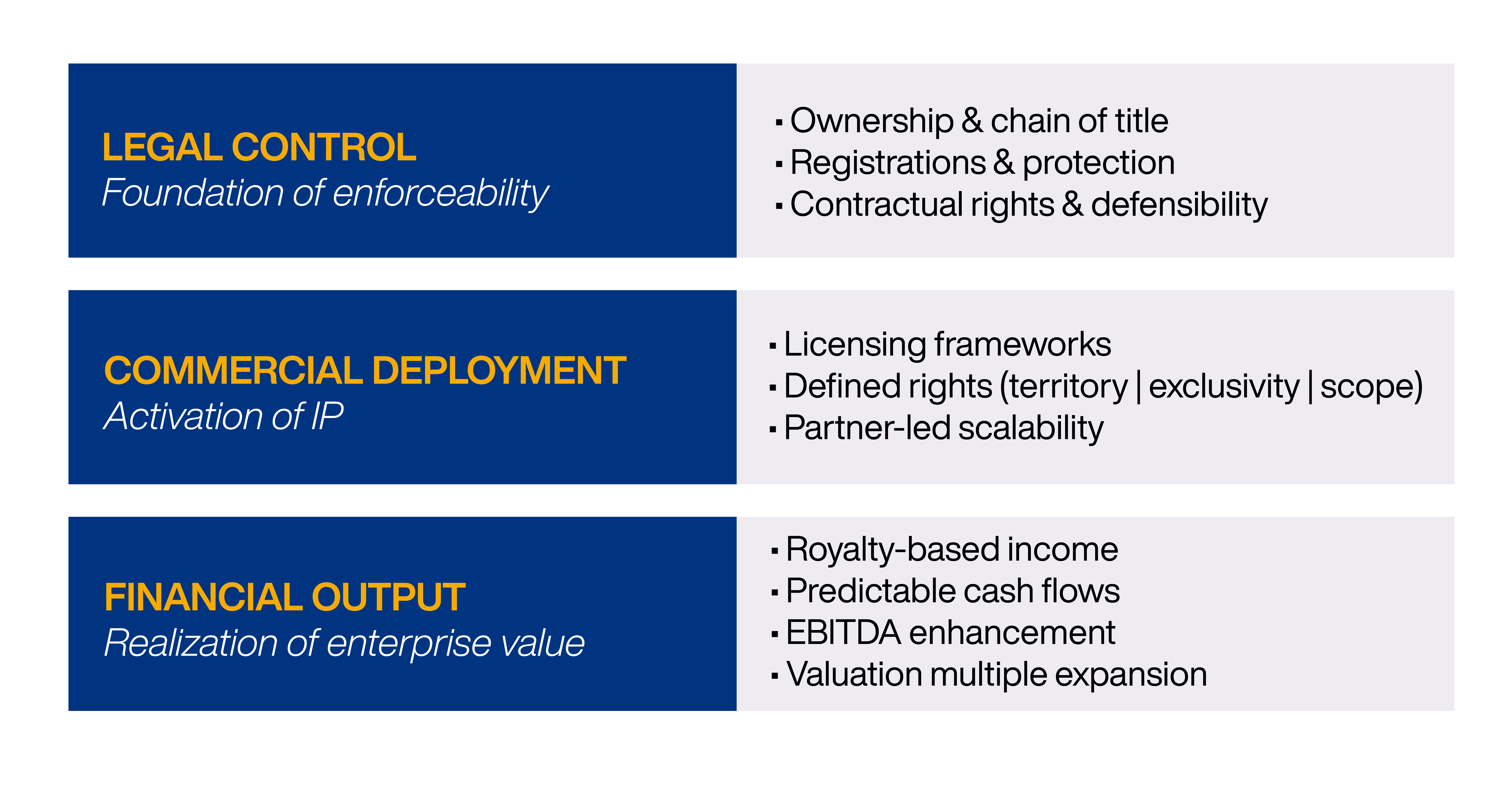
IP-led value creation
Structured IP significantly strengthens valuation metrics:
- Creation royalty based recurring income streams
- Improve EBITDA (Earnings Before Interest, Taxes, Depreciation, and Amortization) quality and predictability
- Reduced reliance on core operating business
- Enhanced negotiation leverage in transactions
Legal structuring Imperative
From an advisory standpoint, value is unlocked only when IP is properly structured
- Clear ownership and chain of titles
- Segregation into IP holding structures (wherever relevant)
- Robust licensing frameworks (intro-group/ third - party)
- Enforceability and risk mitigation mechanisms
M&A Impact
Well deployed IP directly influences deal outcomes:
- Higher valuation multiples
- Increased buyer confidence
- Flexibility in deal structuring (asset V. share deal)
- Potential for post-acquisition revenue continuity
Intellectual property is no longer ancillary in M&A. When legally structured and commercially deployed, it becomes a core driver of valuation, deal strategy, and long- term enterprise valuation.
Unlock the Full Value of Your IP Strategy
