
Cybersecurity Bulletin (15-21 June 2026)
Oracle RCE Vulnerabilities and Global Threat Campaigns Escalate
Recent cybersecurity developments highlight a concerning rise in critical vulnerabilities and large-scale attack campaigns impacting global organizations. Multiple high-risk remote code execution (RCE) vulnerabilities have been identified in Oracle systems, emphasizing the urgent need for patch management and system hardening. These flaws, if exploited, could allow attackers to gain unauthorized access and execute malicious code across enterprise environments.
In parallel, a critical OS command injection vulnerability has been discovered in the Splunk AI Toolkit, posing significant risks to organizations relying on advanced analytics for threat detection. Cisco Identity Services Engine (ISE) has also reported multiple vulnerabilities, further underscoring the importance of continuous monitoring and timely remediation across network infrastructure.
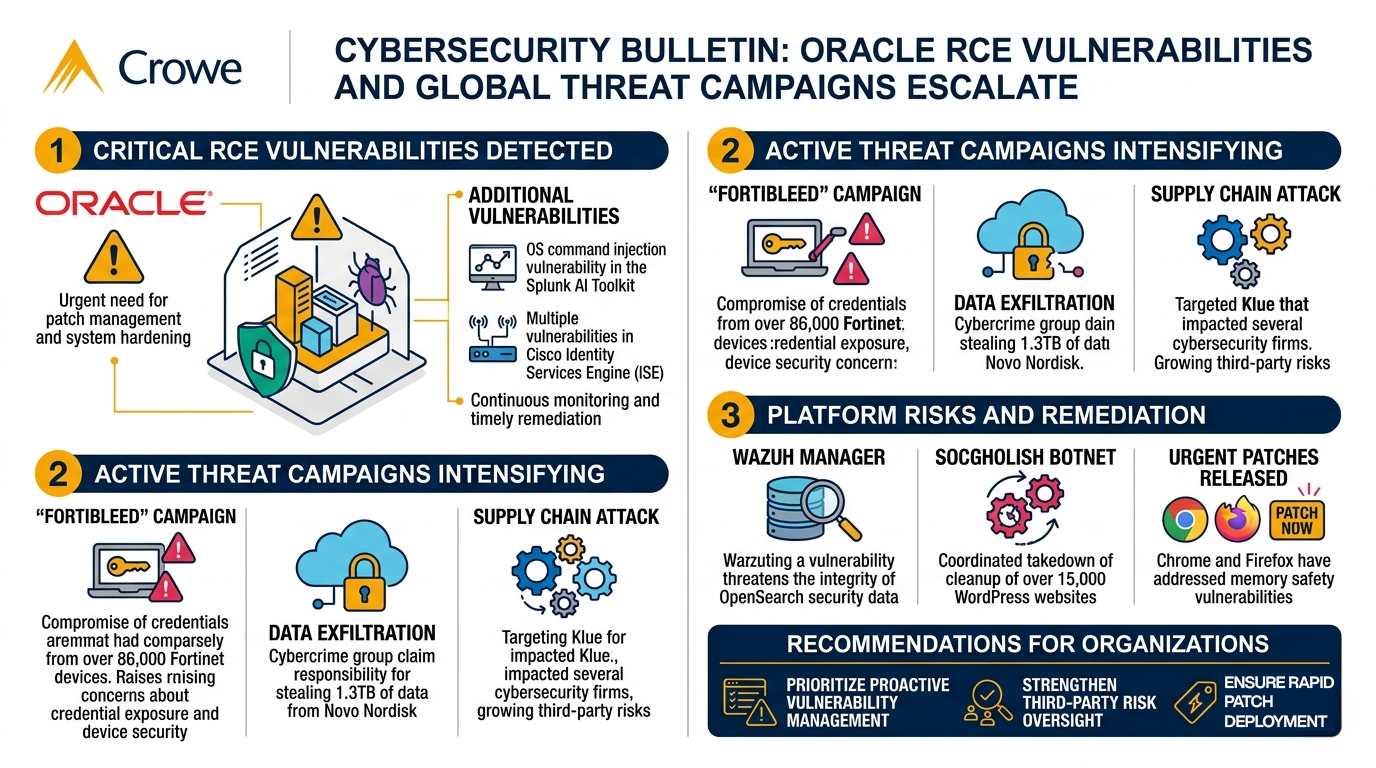
Beyond vulnerabilities, active threat campaigns are intensifying. The “FortiBleed” campaign has reportedly compromised credentials from over 86,000 Fortinet devices, raising serious concerns about credential exposure and device security. Additionally, a cybercrime group has claimed responsibility for exfiltrating 1.3TB of data from Novo Nordisk, while a supply chain attack targeting Klue has impacted several cybersecurity firms—highlighting the growing sophistication of third-party risks.
Security news also points to critical risks in widely used platforms. A vulnerability in Wazuh Manager threatens the integrity of OpenSearch security data, while a coordinated takedown of the SocGholish botnet has led to the cleanup of over 15,000 WordPress websites. Meanwhile, Chrome and Firefox have released urgent patches addressing memory safety vulnerabilities.
Organizations must prioritize proactive vulnerability management, strengthen third-party risk oversight, and ensure rapid patch deployment to mitigate evolving cyber threats.
