Building Risk Resilience in Geopolitical Uncertainty
Virtual Panel Discussion Insights
Introduction
On 21 May 2026, a virtual panel discussion titled “Building Risk Resilience in Geopolitical Uncertainty” brought together risk, compliance, credit, ESG, and cybersecurity leaders to explore how organizations in the UAE and wider GCC can respond to an increasingly volatile global environment. The discussion focused on geopolitical risk, operational resilience, cybersecurity, automation, AI governance, and leadership culture, with a strong emphasis on the UAE’s unique regulatory and commercial landscape.
Panel moderator and speakers
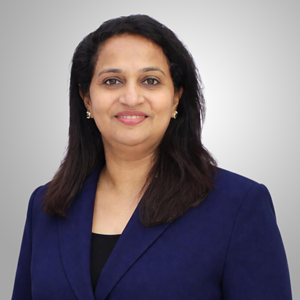
The session was moderated by Reena Mathew, Director of Digital Learning at Crowe, and featured three expert panelists:
Senior Director – Risk & Compliance (Fintech), e& Money
Vice President, Risk, Finstreet Global Clearing & Settlement (FGCS) Ltd
Head of Credit Risk & ESG Risk, United Arab Bank
each contributing practical insights from financial services, risk management, and ESG-led credit strategy. The conversation highlighted how resilience is no longer a back-office concern but a boardroom priority for banks, fintechs, and regulated entities operating in the UAE and across the GCC.
Panel Discussion
How are global supply chain shifts changing credit risk assessments in UAE banks?
Anand Unadkat:
Geopolitical events create friction that affects working capital, cash conversion cycles, and default behavior, so banks can no longer rely only on historical models. He explained that credit teams now assess “time to survive” in addition to probability of default, using expert judgment alongside statistical models to judge whether clients can withstand delays caused by route disruptions or macroeconomic realignments. He also noted that the UAE banking sector is structurally resilient, supported by strong capitalization, liquidity, and regulatory oversight.
How has the current geopolitical volatility fundamentally shifted your industry's approach to high alert compliance?
Varun Gehani:
Compliance is now a frontline strategic function rather than a back-office obligation. He said UAE regulators have intensified scrutiny, citing large AML/CFT fines in 2025 and stronger expectations around onboarding, screening, corridor risk, and dynamic controls. He emphasized that compliance teams must adopt intelligence-led controls, device fingerprinting, geo-fencing, and continuous monitoring rather than relying on static policies.
How do organizations manage flash sanctions without stopping legitimate trade?
Sabarish Raman:
The answer lies in combining the right tools with a clear risk appetite and strong internal thresholds. He explained that overnight batch screening is no longer enough, because sanctions can happen in near real time and false positives can overwhelm teams. The goal is to stop real threats while ensuring legitimate trade continues, which requires a fit-for-purpose model, human judgment, and a well-defined policy layer.
How can growth and risk appetite be aligned?
Varun Gehani:
Growth and risk appetite should be designed together, not treated as opposing forces. He said risk appetite must become a live board-level input into strategic planning, with risk-weighted growth pipelines, scenario planning, and regular regulator engagement. In his view, organizations should treat regulators as strategic stakeholders and embed controls into the product lifecycle from day one.
What really drives operational resilience?
Sabarish Raman:
Culture matters as much as systems. He stressed that tools and frameworks fail when the organization lacks the right mindset, and that risk culture must start at the top and cascade through every level of the business. In his view, timeliness, transparency, and shared responsibility are essential to true operational resilience.
How should banks strengthen operational resilience while growing fast?
Anand Unadkat:
The trade-off is now speed versus control, not just cost versus resilience. He explained that banks increasingly rely on cloud, SaaS, and third-party partners, which means resilience must be designed for graceful degradation rather than perfect uptime. He described risk as a guardrail that allows business to move quickly and safely, especially in a fast-moving UAE market.
How should cybersecurity be reframed?
Sabarish Raman:
Cybersecurity must be treated as a business risk, not an IT issue. He pointed out that attacks now target payments, trade finance, and operations, not just data, so cyber strategy must sit in the boardroom and not merely under IT. He argued that annual assessments are no longer sufficient in an AI-driven threat environment.
Can automation and AI improve risk response?
Varun Gehani:
Yes, but only when automation is fit for purpose and paired with human oversight. He noted that traditional AML systems produce high false-positive volumes, so teams need AI agents, RPA, and machine learning to reduce noise and speed up decision-making. He added that the point where detection becomes decision still requires human judgment.
What advice was given to the next generation of risk professionals in the UAE?
Anand Unadkat:
Stop acting like an auditor and start acting like a commercial business partner. He encouraged young professionals to translate complex risk concepts into business language, help structure deals, and support growth while preserving governance and controls. He said this is especially relevant in the UAE, where the financial ecosystem is actively funding its own transition.
How are industries bracing for AI-backed black swan cyber or fraud events?
Varun Gehani:
Organizations need to think five steps ahead of fraudsters, stay close to regulators and law enforcement, and build robust cyber tools into customer-facing and internal systems. He said fraud patterns such as account takeovers and device hijacks require proactive resilience and close coordination with authorities.
What does a truly resilient organization look like in the Middle East financial ecosystem?
Varun Gehani:
It keeps the human in the loop and treats risk as an enabler, not a back-office burden. He added that resilience depends on whether people are empowered to escalate issues and whether risk is shared openly across the organization rather than hidden.
Can AI governance become a competitive advantage?
Varun Gehani:
Yes. He said AI governance can improve real-time threat detection and lower operating costs, which can directly benefit the P&L and create a competitive edge. Anand Unadkat added that governance is no longer optional because AI is becoming embedded in core decision-making.
If AI were adopted fully as a compliance alternative method, would it give full assurance of accuracy?
Anand Unadkat:
No single model, including AI, can provide complete assurance on its own. He said professional judgment, oversight, and lifecycle governance remain essential, even as autonomous and retrieval-augmented systems become more capable.
Conclusion
The discussion made one point clear: resilience in the UAE and wider GCC is now a strategic capability that spans credit, compliance, cybersecurity, ESG, technology, and leadership culture. From intelligent automation to regulator engagement and risk culture, the panel showed that organizations that embed resilience into everyday decision-making will be best placed to navigate geopolitical uncertainty.
Interested in Cygnus Nexus
Cygnus Nexus Enterprise Risk Management (ERM) | Crowe UAE
,
Risk management solution, contact:
[email protected]
|
+971 52 373 4662
Watch full virtual panel discussion for deeper insights:
GRC Compass
GRC Compass is a curated weekly newsletter published every Thursday, delivering the most relevant insights and updates in Internal Audit, Governance, Risk & Compliance (GRC), Cyber Threat Management, Technology, and evolving training needs. Designed for professionals navigating a dynamic business environment, GRC Compass helps you stay informed, prepared, and ahead of the curve.